-36x36.jpg)


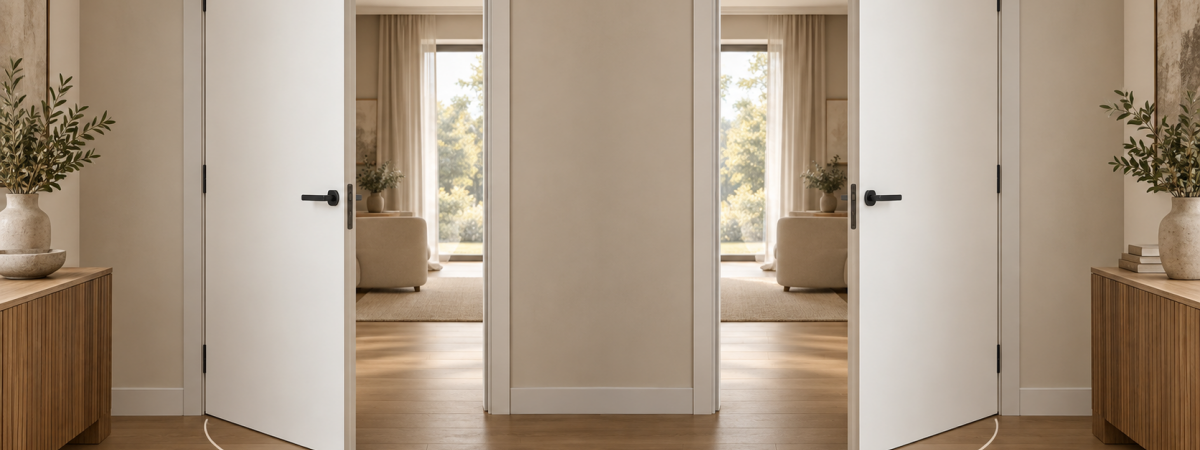
Correct door handing must be specified when ordering an interior door. It determines the position of the hinges, handle and lock, as well as the direction in which the leaf moves.
An incorrectly selected direction may cause the door to interfere with furniture, cover a light switch or obstruct the passage.
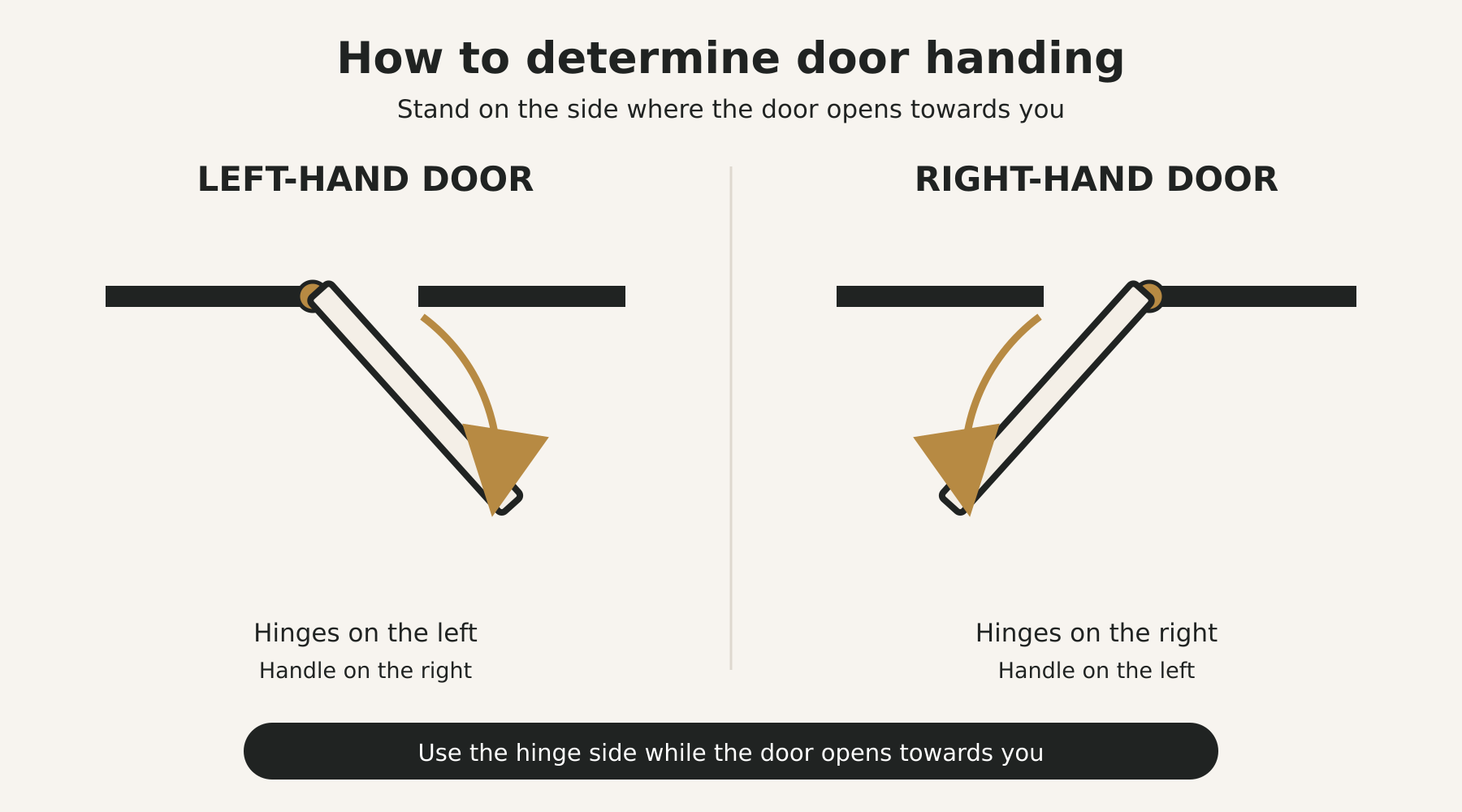
A simple way to identify door handing
Stand on the side from which the door will open towards you.
Check the hinge position:
hinges on the left indicate a left-hand door;
hinges on the right indicate a right-hand door.
The handle will be positioned on the opposite edge of the leaf.
This method is commonly used for interior doors from European manufacturers.
Left-hand door
A door is left-handed when:
you stand on the side towards which it opens;
the hinges are on the left;
the handle is on the right;
you pull the leaf towards your left side.
Right-hand door
A door is right-handed when:
you stand on the side towards which it opens;
the hinges are on the right;
the handle is on the left;
you pull the leaf towards your right side.
Why do mistakes happen?
The same door looks different when viewed from the opposite room. Hinges that appear to be on the left from one side will appear to be on the right from the other side.
Another common mistake is identifying the direction only from the handle position. The hinge side and the direction in which the door opens are the main reference points.
Manufacturers and construction professionals may occasionally use different naming systems. A written description of “left” or “right” may therefore be insufficient.
How can mistakes be avoided?
Prepare a simple room plan and mark the following for every opening:
hinge position;
direction of leaf movement;
room into which the door opens;
nearby furniture;
position of light switches.
You can also photograph the opening and draw the intended swing direction on the picture.
The final arrangement should be confirmed before the door enters production.
Which way should an interior door open?
There is no single solution suitable for every room. The layout and everyday convenience must be considered.
An open door should not:
obstruct a passage;
interfere with another door;
cover a light switch;
hit furniture;
unnecessarily reduce usable space.
A bathroom or toilet door may be designed to open outwards when permitted by the layout and project requirements.
What about concealed doors?
A concealed-frame door requires more information than the hinge side alone.
The order should specify:
left or right hinge position;
swing direction;
standard or reverse opening;
the side on which the leaf must be flush with the wall;
which room is considered the front side.
A drawing should always be provided for concealed and reverse-opening doors.
Sliding doors do not normally have left-hand or right-hand hinges. Instead, the direction in which the leaf slides — to the left or right — must be specified.
When ordering PROFDOORS interior doors, we recommend confirming the opening direction using a room plan. This is more reliable than stating only “left-hand” or “right-hand door”.