-36x36.jpg)


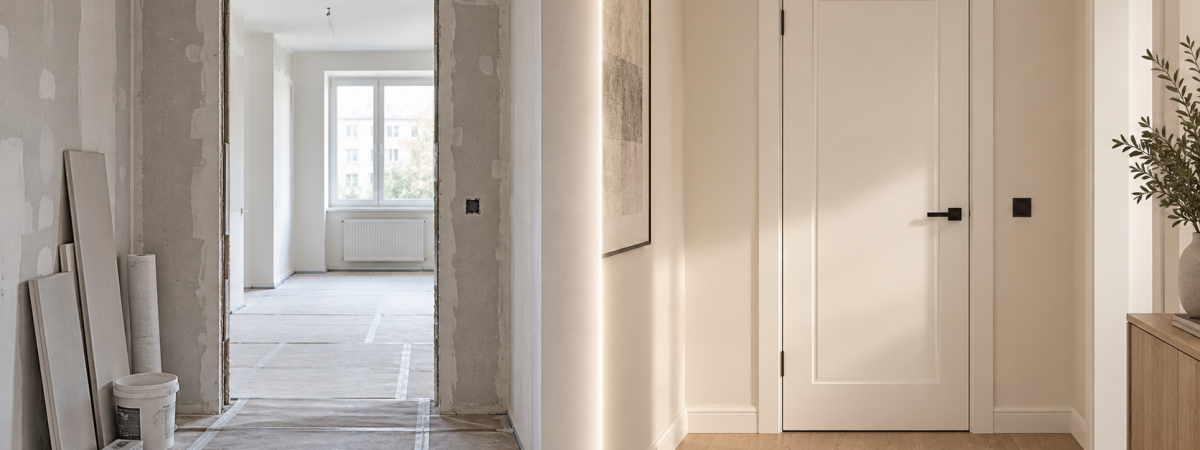
Following the correct construction sequence protects new doors from damage and provides neat connections with the floor, walls and skirting boards. Conventional interior doors should normally be installed after the main renovation work has been completed.
Concealed-frame doors require a different sequence because their aluminium frames must be installed before the final wall finish.
When should the openings be measured?
The openings can be measured once they have been prepared and the exact finished-floor level is known.
The following information is required:
opening width and height;
wall thickness;
final floor level;
flooring type and total thickness;
opening direction;
required clearance beneath the leaf.
If the flooring has not yet been installed, its complete build-up must be known, including tiles, parquet, vinyl or laminate together with adhesive or underlay.
An incorrect floor level can result in excessive or insufficient clearance beneath the door.
When should conventional interior doors be installed?
Doors with wooden or MDF frames should be installed after wet and dusty construction work is complete.
Before installation:
plastering and filling should be finished;
the floor screed should be dry;
the finished flooring should be installed;
walls should be painted or wallpapered;
openings should be straight and properly prepared;
normal indoor temperature and humidity should be established.
The frame, leaf, hinges, lock, architraves and handles can then be installed.
Small paint corrections around the architraves may be completed afterwards.
Which comes first — doors or flooring?
In most situations, the finished flooring should be installed before conventional interior doors.
This allows the installer to determine the correct frame height, create the required clearance beneath the leaf and position the frame neatly on the finished surface.
The floor must be properly protected while the doors are installed.
When should skirting boards be installed?
Skirting boards are normally fitted after the doors. They can then be cut accurately against the architraves or frame.
Installing skirting boards first may interfere with the architraves and create additional cutting or replacement work.
The recommended sequence is:
finished flooring → interior doors → skirting boards → final corrections.
When should walls be painted or wallpapered?
The main wall finish should be completed before conventional doors are installed. This reduces the risk of paint, adhesive and construction dust damaging the new leaf, frame or hardware.
Minor local paint corrections can be made after the architraves have been fitted.
When should concealed doors be installed?
The aluminium frame of a concealed door is installed:
after the opening has been prepared;
when the finished-floor level is known;
before final filling, plastering and painting of the walls.
Once the frame is fixed, its profile is integrated into the wall finish. Reinforcement, filling and painting are completed afterwards.
The door leaf and finished hardware should preferably be installed or finally adjusted after the dirty construction work is complete.
Can doors be installed before renovation is finished?
It is technically possible, but the risk of damage is considerably higher. The leaf may be scratched, the frame may be contaminated with paint or adhesive, and excessive moisture from plaster or screed can negatively affect door materials.
Protective film does not provide complete protection and should not remain on a painted surface for an extended period.
Recommended installation sequence
Prepare and check the openings.
Complete plastering and floor screed work.
Allow the building to dry.
Install the finished flooring.
Complete the main wall finish.
Install conventional doors and architraves.
Install skirting boards.
Complete minor finishing corrections.
Before ordering PROFDOORS interior doors, we recommend confirming the renovation stage, opening construction and finished-floor level. Conventional and concealed doors require different installation sequences, so the process should be planned in advance.