-36x36.jpg)


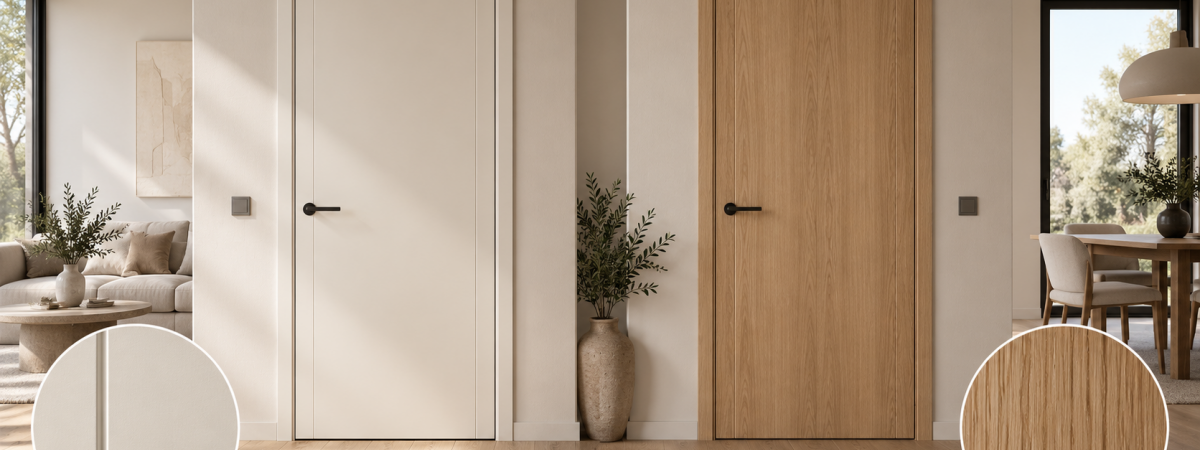
Painted and veneered interior doors can both be high-quality products, but they create a different visual effect and require a different approach to selection. The question is not which material is universally better, but which one suits the interior, budget and conditions of use. Both options can be found in the PROFDOORS interior door catalogue.
Painted MDF interior doors
The main advantage of a painted door is its even surface and broad colour choice. Depending on the model, it can coordinate precisely with walls, furniture, kitchen units or skirting boards in a selected RAL or NCS shade. A smooth leaf works well in a minimalist interior, while routed details and decorative profiles can create a more classic character.
The visibility of dust and fingerprints varies with colour and sheen. Use a soft, slightly damp cloth for cleaning and avoid abrasive products. Whether a local scratch or chip can be repaired depends on the paint system and the factory finish.
Veneered interior doors
Veneer is a thin layer of natural wood applied to a stable base. It retains the real grain of the timber while allowing a technically stable door construction. Oak and other veneers can be stained or lacquered while keeping the grain visible. Because this is a natural material, individual leaves can vary slightly in shade and pattern; this is a characteristic rather than a defect.
Veneered doors are often chosen for interiors with timber floors, stone surfaces and calm natural tones. Avoid prolonged moisture, aggressive chemicals and rough cleaning pads. The exact care instructions depend on the lacquer or other protective finish used on the model.
The main differences
- Appearance: paint provides an even colour, while veneer retains a natural and individual wood grain.
- Colour choice: painted doors normally offer more precise colour matching; veneer is selected by species, stain and lacquer effect.
- Interior character: a painted door can blend into the wall or form a colour accent; veneer adds warmth and texture.
- Budget: the price depends not only on the finish but also on the core, size, routing, hardware and set contents.
- Care: both finishes require gentle cleaning and an appropriate indoor humidity level.
Which finish suits different rooms?
Smooth painted doors often work well in a contemporary apartment with neutral walls. A classic interior can use painted panel designs or veneer. In a house with many natural materials, veneered doors create harmonious transitions between rooms. For an office, consider design, frequency of use and the required level of acoustic comfort.
Do not choose a bathroom door by the material name alone. Check whether the specific model is suitable for the expected humidity and provide ventilation. For greater moisture exposure, consider a WPC door or another construction specifically intended for that environment.
Before making the final decision
View physical samples, compare them with the flooring and wall finishes, and confirm the core and complete set contents. If several doors are being ordered for one project, coordinate opening directions, handles, hinge finishes and architrave widths at the same time.
At the PROFDOORS showroom, you can compare painted and veneered door samples and select a solution for your specific interior.